
Fools Reborn
CoF Tarot Blog
#4 The Emperor - 1st January 2026
Once again failed miserably to schedule this blog post for its intended date, I'm clearly not at one with the order and structure of this blog's topic card. This is an interesting card which is, at the time of writing, still only in a draft form. There will be changes made before the deck goes into production, designed to more closely align the imagery with the Sabrian ideal. We may revisit this card's blog once the final design is ready, or (more likely) we'll forget all about it and you'll only get to see the final card when you buy your own deck after release.
The Emperor
Card Meaning
The Emperor signifies authority, stability, leadership and structure. His work ethic and self control have brought about a stable environment in which all of your endeavours can flourish.
In a yes/no reading this card usually means yes. It particularly strongly means yes when the query relates to themes of the card, such as organisation or decision making.
Setting Specific Design
This draft card design features more heavily accented mountains and lakes in the background than is standard for the Emperor. This links directly to the card as a representation of the ruler of Sabria, those of you familiar with Berg's work should appreciate the importance of the mountains to the Sabrian Monarch. We also made him a younger warrior king than is usual to further align him with the depiction of the war leader as shown in the Collegia Magica novels.
The artist has picked up on the French style of Sabria as a kingdom and replaced the ankh sceptre with the fleur de lis. This will be further altered in the final version of the card and become the golden tree of Sabria - representing life and power like the original ankh, but in a more tailored Sabrian manner.
Mechanical Impact
The Emperor represents the character roles of male nobility or father figures. When drawing during character generation the player should consider whether they are feeling paternal or merely authoritative.
During main gameplay the card, like most major arcana, is found within magic user's decks and only turns up in mundane characters decks if they have specifically bought it as an exchanged card during character creation.
The card has the usual wildcard/magic triggering effects depending on whether the character using it is a mundane or magic using character. When played the card doubles the face value of all other cards played alongside it, but only when it is being used in self defence.
We better stop there lest we become "patronising". Next time we'll continue with the established sequence by revealing the nature of the Hierophant.
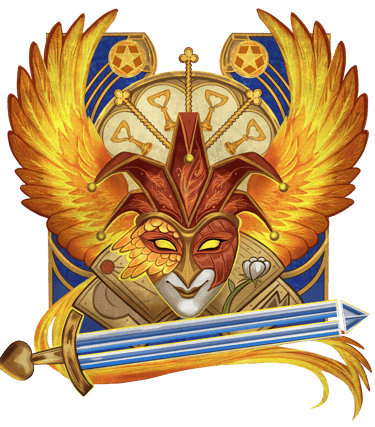
"Fools Reborn" is A Tarot TTRPG of Carol Berg’s Collegia Magica Novels. Coming 2026.
The Fools Reborn game utilises tarot cards, rather than dice, as its core resolution mechanic on both a numerical and narrative level, providing the system the flexibility to model both swashbucking combat scenes and magical manifestation.
As part of the game a newly commissioned tarot deck is being designed by artist David Ledesma, inspired by Carol Berg's Collegia Magica Novels. The deck will also be available for purchase as a stand alone product. Both the main system book and the card deck have a scheduled release window of the first half of 2026.


#0 The Fool - 30th October 2025
Oh you found the new blog, good for you.
We're extremely excited about our forthcoming game and the tarot deck we're making to go with it. There will be people out there who find themselves just as excited as we are because, like us, you straddle the Venn of Tarot, Tabletop and Carol Berg Fandom. We know the tarot people out there appreciate some of the finer details of our new card designs and would like to know more about the reasoning behind them. At the same time some of you don't know Tarot yet but do know RPGs and want to hear how the two can be put together to create stories. Lastly there are those of you firmly in the Berg fandom but who might not know the joys of collective storytelling or the ins and outs of Tarot correspondences.
So we've decided to write a fortnightly blog about the cards, our game mechanics, and how they link to the world of the Collegia Magica novels. Starting where all tarot should, with the Fool.
You can see somewhere on this page Ledesma's dual design for the Fool card, and hopefully like us you find them pretty. This card contains all the usual symbolic elements found in traditional tarot and one of two twists binding it into Berg's Sabria. So let's establish our writing format here: 1) What does this card mean? 2) How does it represent Berg's specific fantasy setting? and 3) How does it mechanically impact on the stories you can tell during the game?
The Fool
Card Meaning
Tarot should be read intuitively based on your own personal reaction to the image and what you know of its meaning, but clearly this process is helped by a more detailed knowledge of the symbology.
The Fool represents the concepts of beginnings, spontaneity, independence and innocence. They are freshly embarking on the adventure of life or upon some new endeavour with hope in their heart. The cliff edge represents a leap into the unknown, the flower is innocence, the canine companion embodies his guiding natural instincts, and the sunlit sky the blank canvas of each new day.
The Fool usually represents an untrammelled "Yes" answer to most questions. It is action unfettered by introspection.
Setting Specific Design
In the world of the Collegia Magica the noblest souls sometimes return to the world, born again into earthly bodies in order to complete some task for the betterment of mankind. Such a return comes at the cost of autobiographical memory - the new life remembers no specifics of the souls prior incarnations.
You can see our fool is wearing a messenger bag and is in danger of losing its contents over the cliff edge. We added this detail to strengthen the representation of the Fool as tabula rasa, the blank slate. The inclusion of some kind of written material into the card design was also crucial given the character of the fool himself is intended to represent a certain librarian, immersed in the investigative narrative of the book "The Spirit Lens".
In the "The Spirit Lens" a magical artefact purports to show viewers a window onto the world beyond the veil of death, and this is represented in the "Dead" version of the card
Mechanical Impact
In the "Fools Reborn" game character creation is driven by a Tarot reading and most new players will intuitively develop their character ideas based on the cards drawn. At this point in the game each card indicates possible positions in late medieval society, with the Fool representing the concepts of Performer, Artist and Beggar or a more Youthful or Naive character.
During main gameplay the Fool card is the driver of critical failure within the game system. If you pull the card during play you usually have to discard the hand drawn, automatically failing the current task, but are compensated for the immediate narrative loss by gaining Destiny points - a form of meta-currency or experience tokens that can be spent on improving your character's skills and abilities.
The card also provides the "Excuse" - meaning it can save you from damage that might otherwise be inflicted upon your character through in game combat or misadventure.
So now you've reached the end of our first tarot blog. Hopefully you know a little more about our game and how the Fool card works within it. We hope to see you again as we delve into the meanings and uses of other cards.


#1 The Magician - 15th November 2025
If you are reading this then you've persevered with coming to the blog despite the fact that this post singularly failed to go live on the listed date. Mea culpa. Anyhoo...
As you can see we've shared with you hereabouts Ledesma's dual design for the Magician card. This card has been carefully designed to contain key elements found in traditional tarot whilst linking to the suit designs for our game. Once again we'll be discussing: 1) What does this card mean? 2) How does it represent Berg's specific fantasy setting? and 3) How does it mechanically impact on the stories you can tell during the game?
The Magician
Card Meaning
The Magician traditionally represents resourcefulness, planning, inspiration and power. The potential of magical knowledge to change the world.
The card masterfully represents a solidly constructed "Yes" answer to most questions.
Setting Specific Design
In the world of the Collegia Magica circles are important to spellcraft, so we've included lots of those in the imagery, as well as the usual infinity symbol. Upon the table of mystic artefacts there's a skull, a nod to the interests of the particular magician from the novels that inspired the design of the character on the card.
You can see our Magician's wand is more of a staff, as is fitting for the Sabrian setting. His blue robes and mage's silver collar are also direct ties to the fantasy of the Collegia Magica, where all trained mages must display the collar as a sort of combined badge of office and a warning to others. The blue is the signifier of a trained Sabrian mage, as opposed to the green of the student - a change from the usual white of purity and red of willpower and passion which are more often seen in esoteric decks.
Mechanical Impact
The Magician represents the character creation concepts of the learned mage, but also any kind of scholar or scribe that might be encountered in Sabria.
During main gameplay the Magician card is usually the only critical success card present in the decks of mundane characters (those who do not use magic). For this kind of character it can be extremely useful though, usually successfully completing an action requires the play to lay down a number of cards of the correct suit. The Magician overrides that - making any card played alongside it wild - counting as if it were the required suit.
For a magic using character this card, like all of the Major Arcana, also allows the tapping of arcane energies allowing a spell to be cast. If you are a spell caster then you may have another Major Arcana card in your hand and you can recycle the Magician, revealing him in order to temporarily change the other card count as if it were the Magician, before burying the real mage back into your deck to rise again later in the game.
And that's about it for the magnificent Magician. If you haven't already read our post about the Fool then read on below, otherwise we'll see you soon to explain the depths of the mysterious High Priestess.


#2 The High Priestess - 1st December 2025
Staring at the dates in the calendar between now and our intended release data today we realised that we're not going to get anywhere near the end of even the Major Arcana before game release. Maybe I should write these more frequently? (I'll probably overthink this decision for a while and then in the end, in tune with this blog's featured card, I will probably go with my gut.)
The High Priestess
Card Meaning
The High Priestess signifies intuition, the subconscious, the hidden, the sacred, and the feminine. The overall theme of the card is taking time to reflect and then placing your trust in gut feelings. She is a bridge between the supernatural and physical worlds.
In a yes/no reading this card generally represents a cautious "Yes" answer or the response "You already know the answer to this question".
Setting Specific Design
Sabrian religious symbols differ in many respects from medieval european ones. As a result, whilst the twin pillars and general balance of the card remain the symbology of the sceptre held by the female figure is a variation of the Delta Pi symbol used by the Collegia Magica world's Pantokrator religion. The variation is the inclusion of a downwards arrow linking in with the card's usual association with the phrase "as above so below...". The card also represents our take on the main female lead from the novels.
Whilst the Magician is the card of "Canonical Magic" conducted by trained professional mages, the High Priestess represents the untrained or intuitive magic user, this representation is furthered by the word "Kierna" written on the book held by the figure. We added this partly because the card traditionally features the esoteric names of the two pillars, but this wasn't appropriate for a card that isn't from our earth. Instead we included the word "Kierna", used in the books to describe the collection of qualities and experiences that make up a material thing or being and this concept is looked down on by trained mages but used extensively within the "folk" magic of the world.
Mechanical Impact
The High Priestess represents the character creation concepts of the self-taught mage and also the roles of nun, seeress or nurse.
During main gameplay the card, like most major arcana, is found within magic users decks and only turns up in mundane characters decks if they have specifically bought it as an exchanged card during character creation.
For a magic using character this card, like all of the Major Arcana, also allows the tapping of arcane energies allowing a spell to be cast. For a mundane character this card, as with all Major Arcana, is wild - but unlike the Magician this wildness does not carry over to affect other cards.
When played the card double the value of other cards played alongside it, but only if they are being used to represent the concepts of clairvoyance, divination, perception or gambling.
We hope your intuition tells you to keep up your interest in our game and that you might also feel like sharing our musings here with any friends you have you you think might like the idea of our tarot based storytelling game. Next time: The other big representation of femininity #3 The Empress.


#3 The Empress - 15th December 2025
We've been busy in the run up to the festive period consulting with David Ledesma as he designs the minor arcana cards for this deck, so it's nice to come back to the major arcana in order to write this blog entry on the Empress.
The Empress
Card Meaning
The Empress signifies beauty, nature and abundance. Her creativity and maternalism influence how ideas progress from germination to fruition. This card says all the conditions are right for new beginnings and new developments to occur.
In a yes/no reading this card usually indicates a slow yes, everything is in place but the desired outcome will bloom in it's own sweet time.
Setting Specific Design
The symbolism of the crown a sceptre as power combined with the natural flourishes in the card show that the Empress is in a position to guide and channel natural development. The colour choices blend the traditional tarot palate with the colours ascribed to the sartorial choices of the queen within Berg's novels.
The Empress card also features prominently the fertility of corn, the heart symbol and the symbol for female power. Growth, love and femininity are therefore key representations of the card. We left only a hint of the usual pomegranate symbolism in the dress fabric, as we weren't entirely sure that pomegranate was a Sabrian thing; so it's there, along with its suggestion of potential fertility, but only as subtle underlying patterning.
Mechanical Impact
The Empress represents the character roles of female nobility or maternal figures. When this card turns up during character generation the player should consider how to work those creative and maternal influences into the character's backstory.
During main gameplay the card, like most major arcana, is found within magic user's decks and only turns up in mundane characters decks if they have specifically bought it as an exchanged card during character creation.
For a magic using character this card allows a spell to be cast. For a mundane character this card is wild. When played the card doubles the face value of any Wands suited cards played with it. This links directly to the concept of creation embodied by the card, because Wands is the suit tied to the fine motor skills used by artists and artisans. As a result using this mechanical aspect of the card will make the character better at creating new things.
Next time we'll continue with the established sequence by speaking, with some authority, about the Emperor.